a tête-à-tête with all in the making
Entry Date
24 April 2026
Image credits
All in the Making
San Stae
“And perhaps that’s what making is - a way of leaving a part of yourself behind and a way of saying “I was here”.
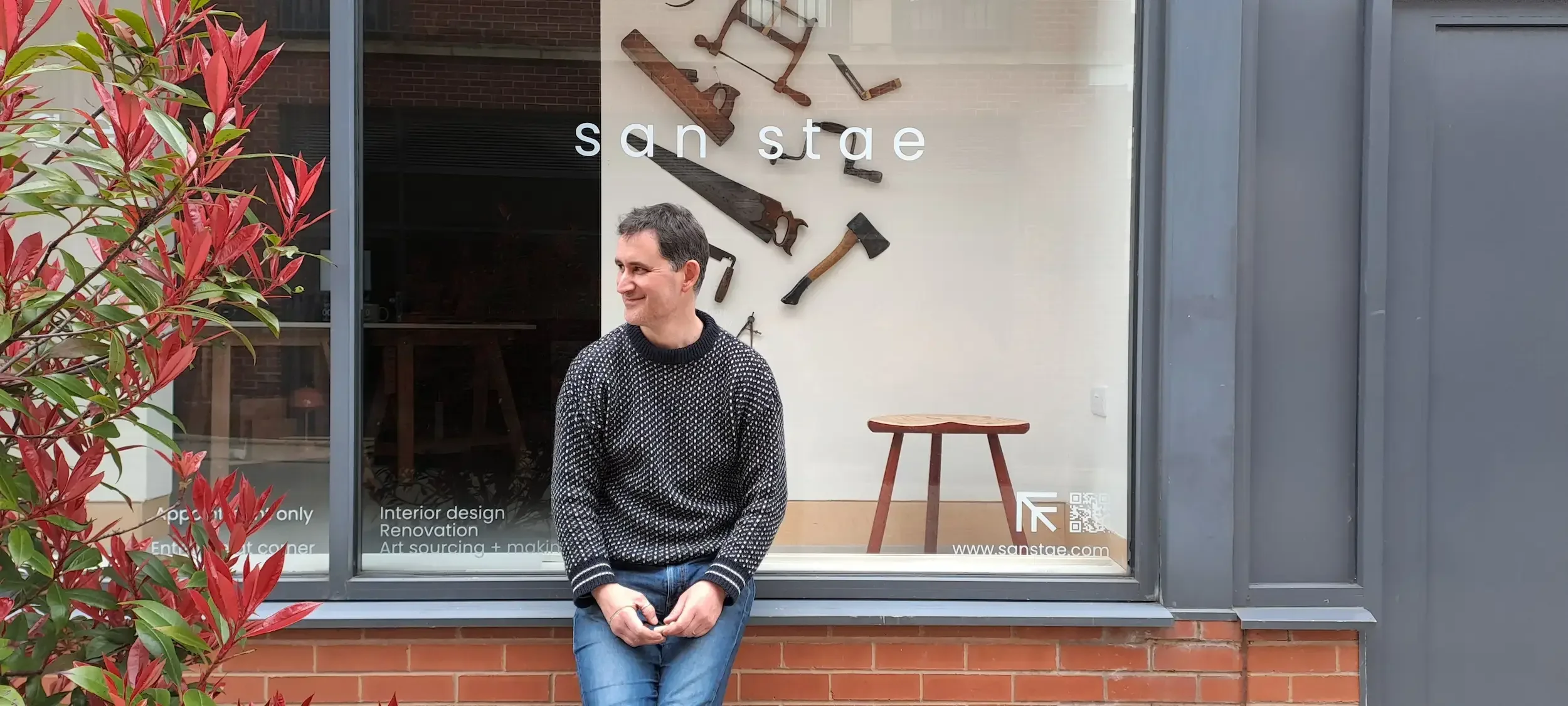
In April, we invited friend and maker John Crossley, founder of All in the Making, to launch our first Artist Spotlight - a new series celebrating local artists and makers. Taking over our Leamington studio window, John shared an insight into his work, his practice, and where it all began.
Aly: Let’s start with Compton Verney, the gallery where we first met, when we both worked there, and how that inspired you to start making.
John: I trained as an illustrator in Manchester, and that helped me get into museums and galleries. Having that arts degree gave me a foothold there. To be honest, the museum world didn’t really mean much to me at first, until I moved into a technical manager role. Part of that job was looking after conservation. Through condition checks, conservation cleaning, and installing exhibitions, I started looking at objects much more closely. One thing that really struck a chord with me, and I didn’t see it coming at all, was the furniture, particularly the Folk Art pieces there. I loved the honest simplicity of the joinery. The fact that you could see how something was made in the finished piece really stayed with me. A lot of the joinery in my own chairs follows that same tradition - what you might call honest joinery. It’s all on show. Nothing is hidden. I loved that accessibility - simple joinery, incredibly strong, a method that’s been around for a very long time. It got me thinking - could I make something like this myself? I’d never really considered it before.
A: How did things develop from there?
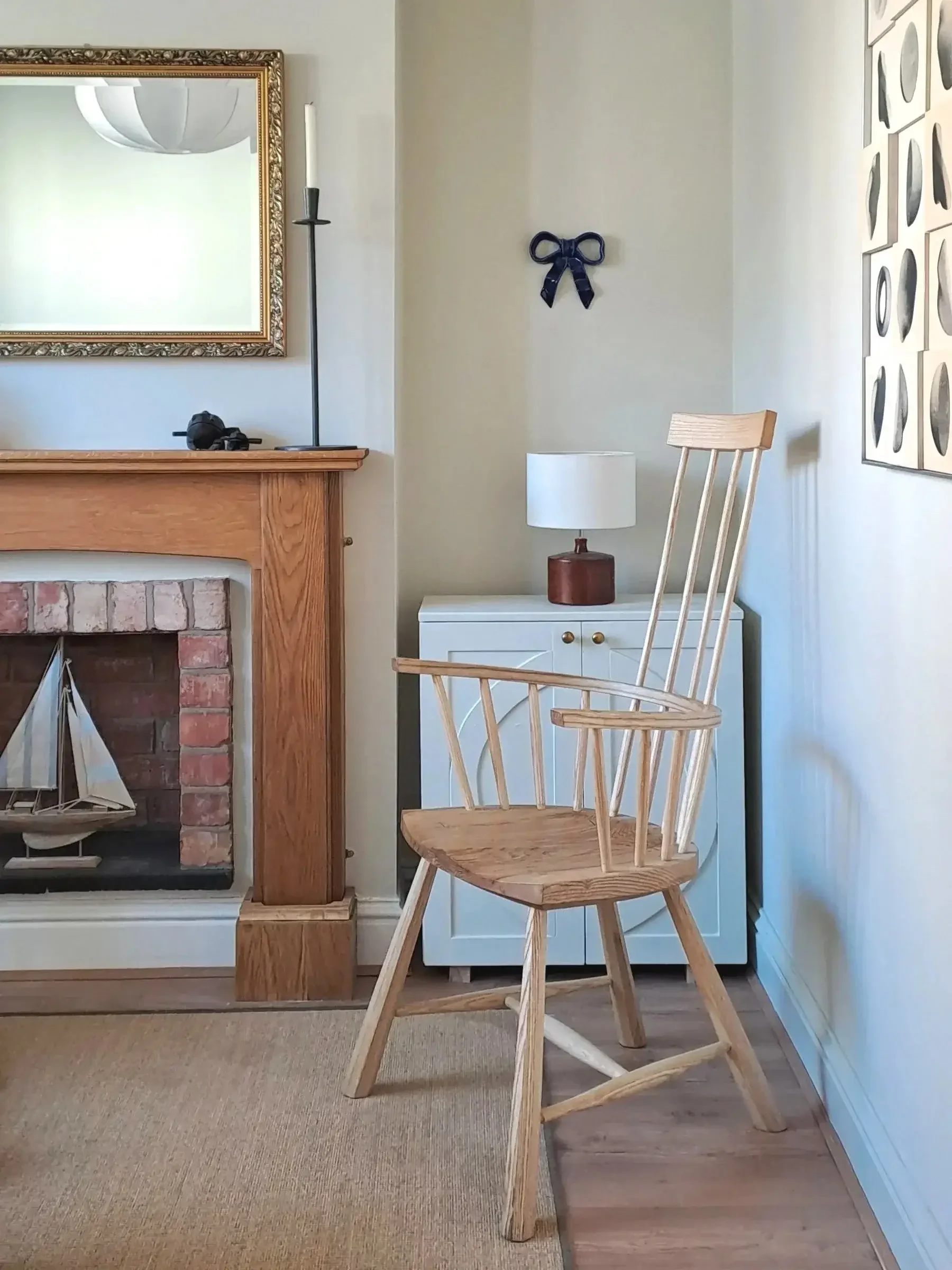
J: I started reading guidebooks and manuals and began teaching myself. I don’t use computers, and I certainly don’t use CAD. Take the tête-à-tête chair for example - there wasn’t really any formal designing. It started from my stick chair design. A lady from the National Trust got in touch and said she really liked it and wanted a version based on that, so we went from there. By that point, I knew how to make a stick chair without looking at plans because I’d made so many.
A: Do you still have the first seat you made?
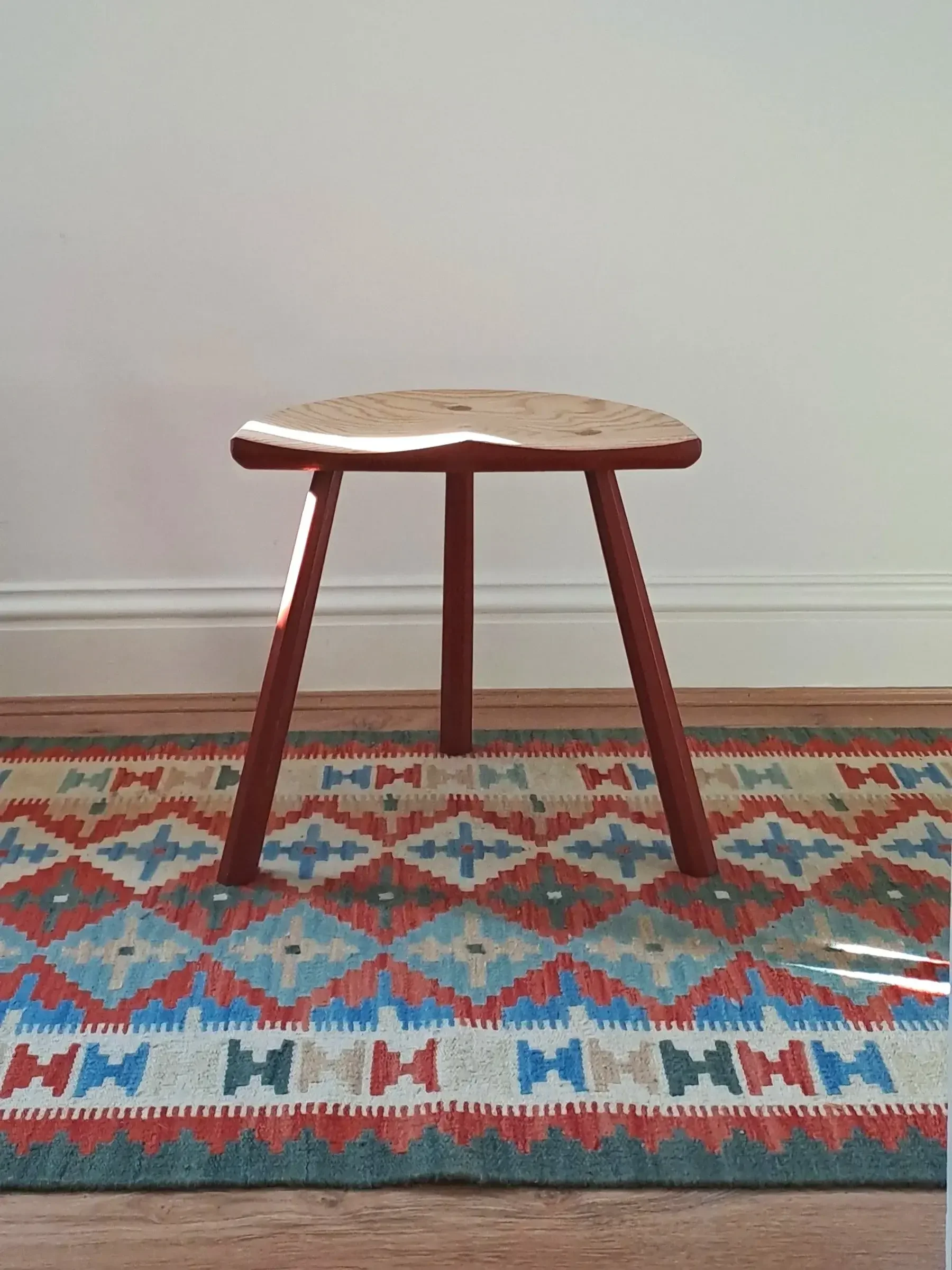
J: Yes - a three-legged stool. After the stools came different designs and then eventually I made the leap to chairs, which at the time felt enormous. I remember thinking, how am I going to do that? But it felt like something that had to happen. When I finished the first one, I honestly couldn’t believe I’d done it.
A: We were talking about how long they take to make. It’s a slow process, but each one is unique.
J: Absolutely. Even if the angles and dimensions are technically the same, the wood itself always looks different. It always has its own character. And then, of course, how it ages changes it too. No two things are ever exactly the same. It’s about as far from mass production as you can get.
A: What influences your work?
J: I’d say Welsh vernacular styles, particularly stick chairs, have had a strong influence. They’re similar to what you’d call an English Windsor chair, but the Welsh ones tend to have a more open arm and wider-set legs. There are so many beautiful curves and angles, and very little showing off. I’ve never really seen the point in over-fussing anything. I really respect that directness - here’s how it’s made. You can clearly see the components and how it’s been constructed. There’s something about that honesty that really appeals to me.
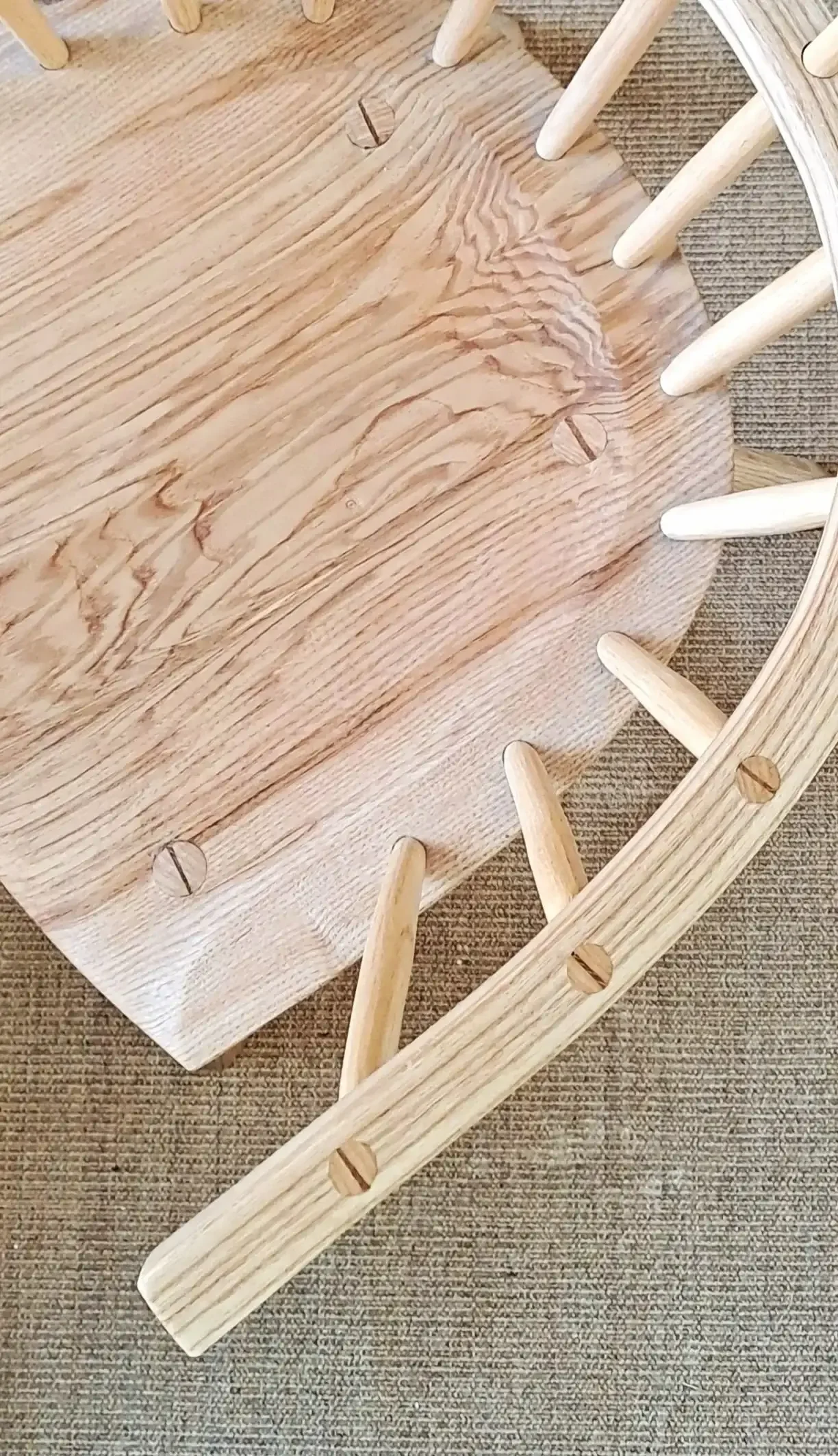
A: That was something I picked up on earlier - this idea of honesty. It’s just wood. No screws, no nails, just a tiny bit of glue. The design relies on timber using timber, which is amazing.
J: At one time there would have been no glue at all. Then animal hide glues would have been used, melted down, basically. They still use it today, and it’s great.
A: Gorilla Glue!
A: Why does working by hand and relying on traditional joinery still matter today?
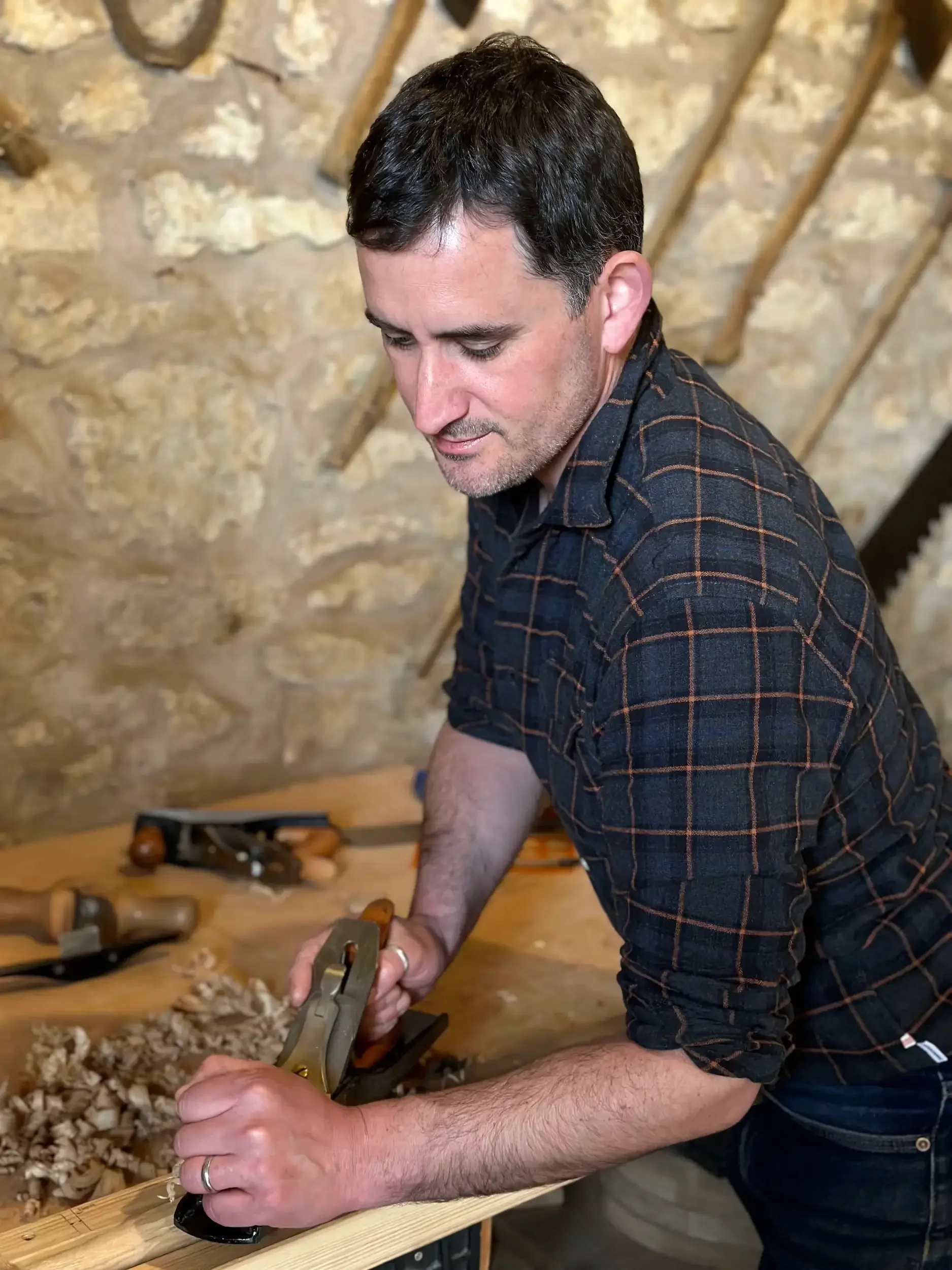
J: Hand tools teach you much more about the material. When you’re shaping wood with a drawknife, the grain tells you what to do. If you work against it, the tool lets you know immediately. The more you understand the material, the more you understand how it wants to become something.
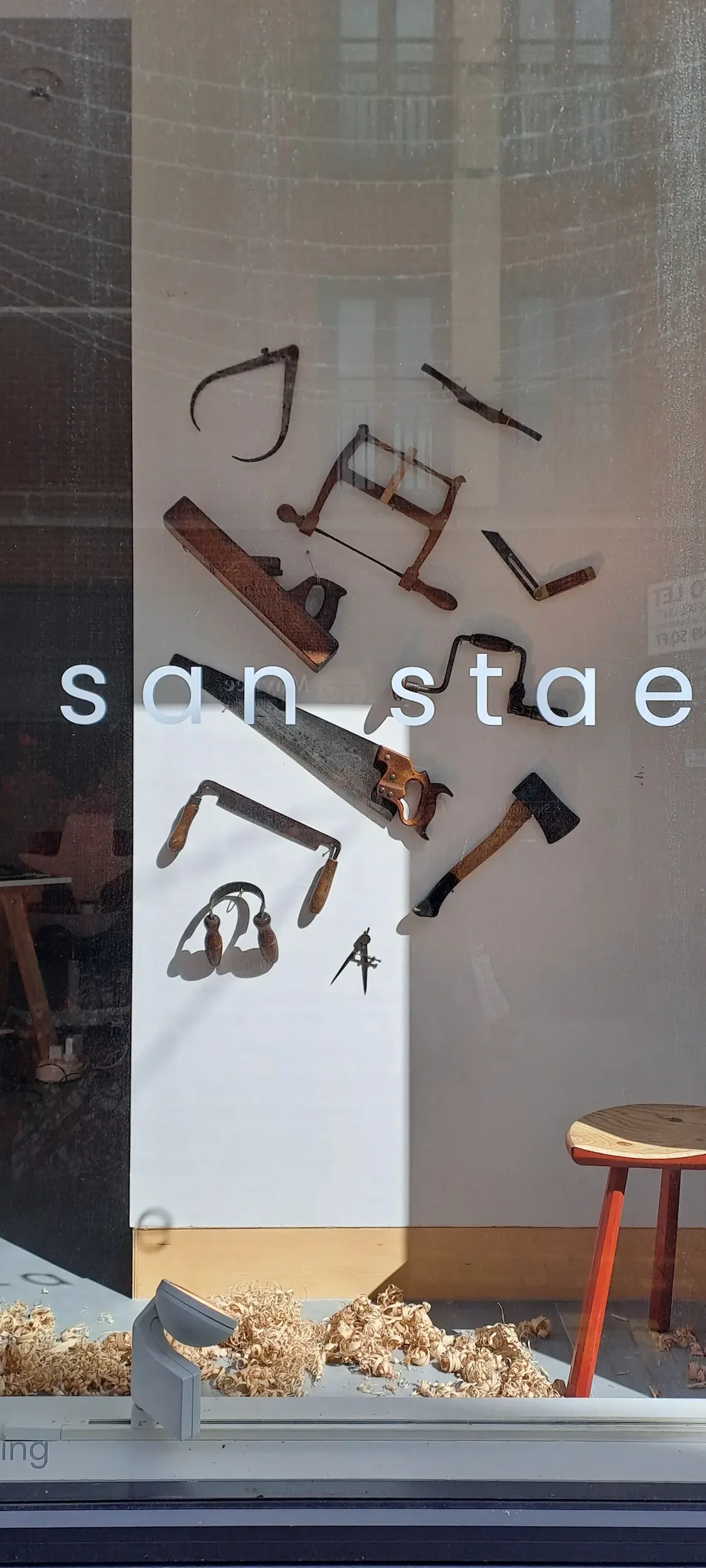
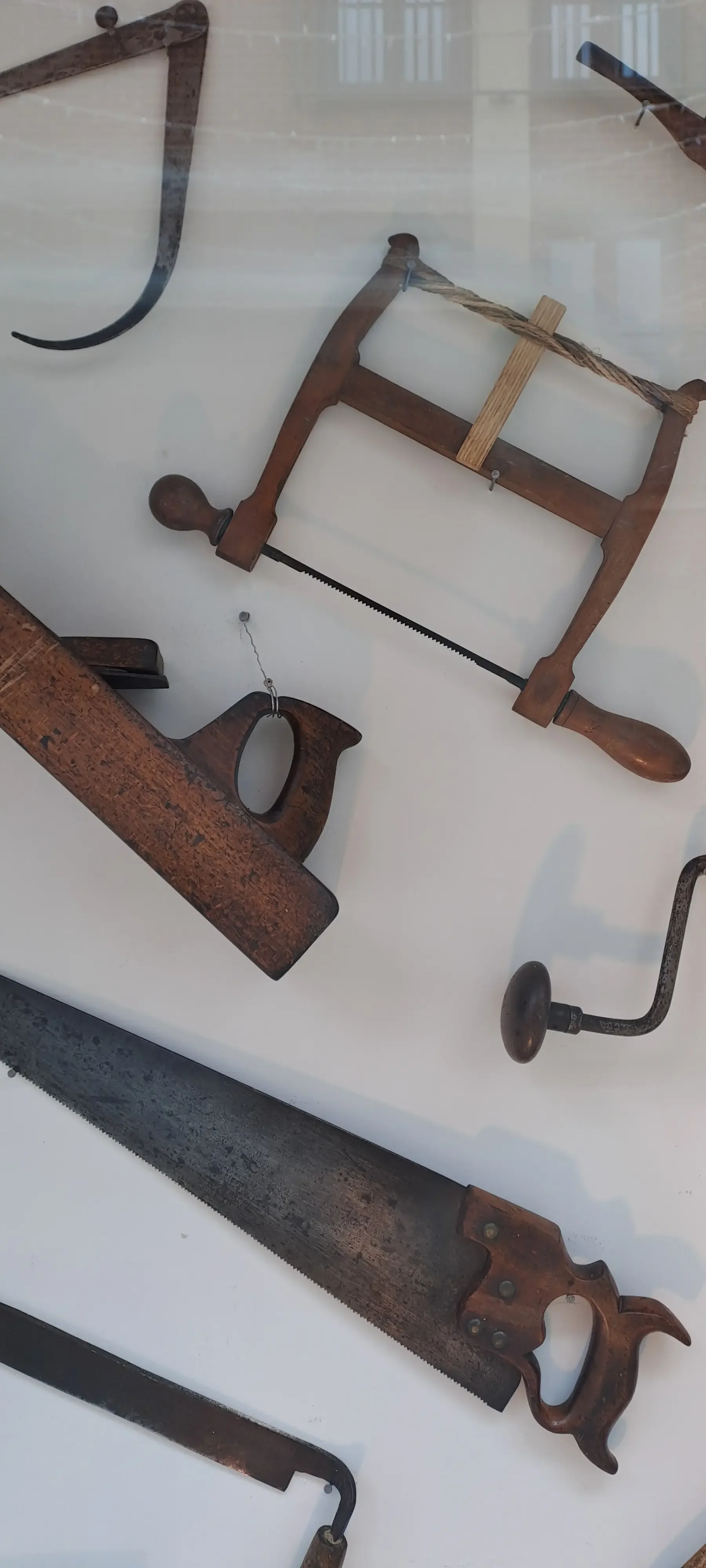
A: In our studio window, we’ve suspended one of your stick chairs, a stool, and a selection of your tools. We’ve almost gone full circle - from collection display, to your studio, back behind glass. What’s beautiful is seeing the tools alongside the things they’ve made. You can read the wear in them.
J: I thought about that. In fact, you don’t even need all of those things to make that chair. You could get by with less.
A: Your tools feel as much a part of the story as the furniture. Is there one you return to most often?
J: I don’t have many inherited tools. But there’s one object I have from my granddad Fred, my mum’s dad. It’s a boot-polishing brush made of lead. He shaped the lead so that his fingers would fit perfectly inside it. And my hand fits it perfectly too. It’s literally the only thing I have of his. He died just before I was born, so we never met. The shape of his grip is still there, pressed into the metal and when I hold it, it feels almost like holding his hand. Perhaps that’s what making is, in part - a way of leaving a part of yourself behind and a way of saying “I was here”.
A: That’s really moving. You’ve made me think of my stepdad, who has an enormous collection of tools, many inherited, with the best one being Auntie Brenda’s Bodger, which always makes me laugh. It’s literally just a pointy stick for marking holes in the wall. But it’s not about what it does, it’s about handing it down. It becomes almost ceremonial when we use it.
A: What really struck me about your workshop is that it feels almost outside of time. There’s barely any trace of electricity. Even the candles hanging from that cart-wheel chandelier felt somehow right.
J: We had a power cut and the candles came in very handy. I just thought, well then - who’s laughing now? I’m not some kind of extremist, but it does cross my mind. I remember thinking, if this went on, and for some reason I still wanted to carry on making chairs in a world without power, could I? And I thought, actually, yes. It’s a comforting thought.